

Supreme Court strikes down Trump's tariffs in 6-3 vote
WASHINGTON - The Supreme Court ruled Friday that the International Emergency Economic Powers Act (IEEPA) does not authorize President Donald Trump to impose the tariffs.
The decision was 6-3, with Justices Kavanaugh, Thomas and Alito in dissent.
The high court's decision centers on tariffs imposed under an emergency powers law, including the sweeping "reciprocal" tariffs he levied on nearly every other country.
Friday's ruling comes despite a series of short-term wins on the court's emergency docket that have allowed Trump to push ahead with extraordinary flexes of executive order on issues, including high-profile firings to major federal funding cuts.
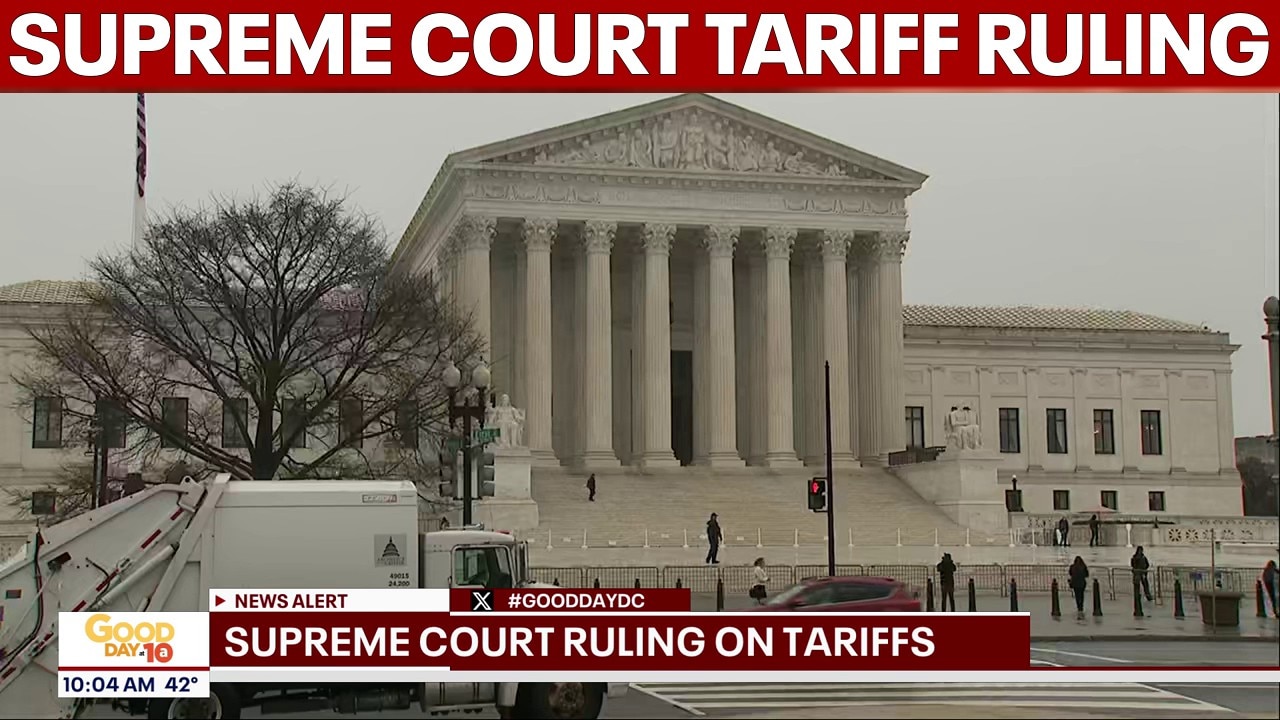
Supreme Court strikes down Trump tariffs
The Supreme Court has struck down President Donald Trump’s sweeping tariff policy, disrupting a key part of his economic agenda.
What does the Supreme Court’s ruling mean for tariffs?
Dig deeper:
The tariffs decision doesn't stop President Donald Trump from imposing duties under other laws. While those have more limitations on the speed and severity of Trump's actions, top administration officials have said they expect to keep the tariff framework in place under other authorities.
According to the Associated Press, the Constitution gives Congress the power to impose tariffs. However, the Trump administration argued that a 1977 law allowing the president to regulate importation during emergencies also allows him to set tariffs.
Meanwhile, other presidents have used the law dozens of times, often to impose sanctions, but Trump was the first president to invoke it for import taxes.
What are tariffs?
Big picture view:
Tariffs are taxes levied on imported goods. Although they are paid by organizations at the border, the costs are often passed along through higher prices, leaving consumers to endure most of the financial burden.
President Donald Trump has lauded tariffs as a key source of government revenue, and within months of his sweeping trade policies taking effect, billions of dollars had already flowed into federal coffers.
RELATED: Explain tariffs to me: What are they? How do they work?
Are Trump’s tariffs working?
By the numbers:
President Donald Trump’s higher tariffs are certainly raising money. They’ve raked in more than $236 billion through November — much more than in years past.
However, they still account for just a fraction of the federal government’s total revenue, while disrupting global commerce and straining the budgets of consumers and businesses worldwide.
And they haven’t raised nearly enough to justify the president’s claim that tariff revenue could replace federal income taxes — or allow for windfall dividend checks for Americans.
The U.S. trade deficit, meanwhile, has dropped substantially since the start of 2026. The gap peaked to a monthly record of $136.4 billion in March, as consumers and businesses hurried to import foreign products before Trump could impose his tariffs on them.
Who pays for tariffs?
Local perspective:
While tariffs are nominally a tax paid by the companies who import a product, many experts note that American consumers have historically shouldered the bulk of the tariff cost through higher prices.
"It is like a tax on the finished products," Chris Gaffney, the president of TIAA World Markets, told FOX Business during Trump’s first term. "It drives up the cost of production, and ultimately the price of the product."
Other experts, though, point out that global manufacturing and trade provides enough options for countries and companies to negotiate lower prices or find alternate sources of materials, reducing the impact of tariffs over time.
The Source: Information for this story was provided by previous LIVENOW from FOX reporting and FOX Business. This story was reported from Washington, D.C.